Collecting guides
What Is an Obi Strip?… The Paper Band on Japanese Records
Published
The obi is the paper strip on Japanese records and CDs. What it carries, where it came from, how to tell it belongs to your copy, and how to keep it intact.
In short
- An obi is a paper strip on Japanese releases, printed with title, catalogue number and price.
- Sources suggest the 1950s or 1960s but don't identify the first record with an obi.
- Printed prices and designs changed over the years, which helps narrow down an edition.
- Fake obis exist and reissues can reproduce an original obi, so an obi alone proves no first pressing.
- Keep the obi in the sleeve with its record, away from light and damp.
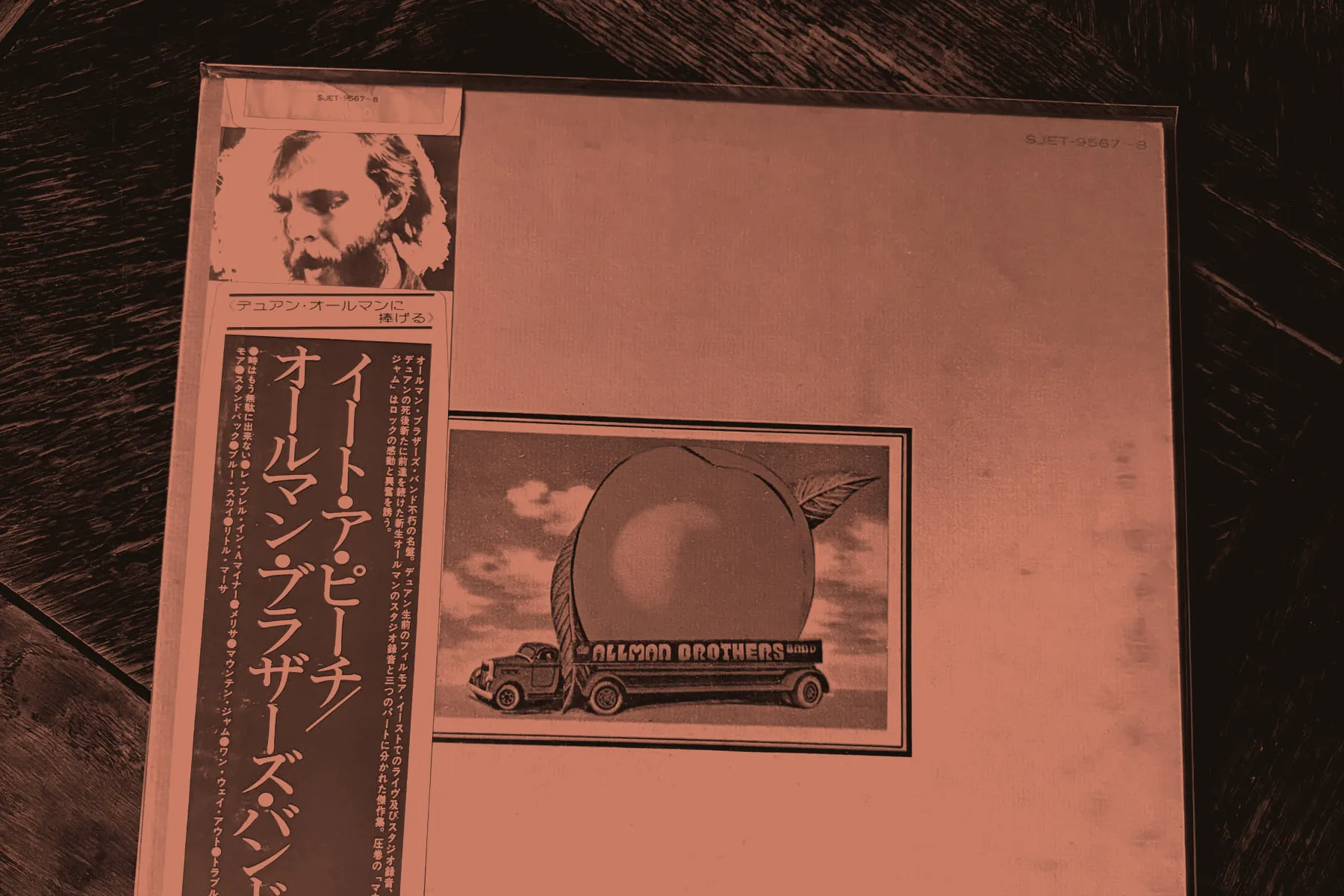
A Japanese record often comes with a narrow paper band wrapped around the left side of its sleeve. Plenty of listeners threw it away once they got home.
The obi is a paper strip found on Japanese records and CDs. Audio-Technica’s glossary calls it a Japanese custom that records made elsewhere usually lack. Collectors around the world now look for it by name.
What the obi carries
The front usually shows the title in large type, with a tagline, the catalogue number and the price in smaller print. The back often advertises related releases or playback equipment.
On Western records sold in Japan, the obi did a second job. It gave the Japanese title, the artist’s name in Japanese and a line of copy aimed at local listeners. Audio-Technica describes it as advertising for the home market.
CDs carry the same kind of strip. Japanese Wikipedia describes it as a stiffer card folded twice to match the case, fitted over the spine. In Japan it is often simply called a cap.
When and why it began
The sources disagree on when. Japanese Wikipedia and a Japanese record-buying column put it around the 1950s; Discogs’ feature on the obi says the 1960s. The sources don’t name a first label or title.
The reason is debated too. A feature in the Japanese magazine BRUTUS offers one explanation among several: when selling foreign records, a strip in Japanese made them easier to understand.
The shape has varied as well. Goldmine describes the earliest obi, the hankake obi, as a strip draped over the top of the sleeve without closing into a loop. A kabuse obi fits over the top edge of the sleeve; most obis wrap around the left side.
Does this obi belong to this record?
Most obis are only wrapped around the sleeve, not glued down. They slip off easily and get lost just as easily. So check that the obi you hold belongs to the same edition as the record.
- Compare the catalogue number on the obi with the one on the spine and on the label. If they differ, the obi may have come from another edition.
- Read the printed price. Price formats and obi designs changed over the years, so they help narrow down when a copy was issued.
- Check the obi itself is genuine. Paper is easier to copy than a sleeve or a record, and a column by a Disk Union store manager and buyer warns that rare obis are best assumed to have counterfeits.
The same column shows what betrays a fake, with real examples: logos with square, jagged edges that the phototypesetting of the period could not produce, or the same logo in a different font and feel. On a hankake obi, glue traces at the top of the back are a mark of the real thing, though their absence proves nothing. And since counterfeiters dirty their copies to make them look old, an aged look proves nothing either.
Nor do the tells stay valid forever — the fakers keep producing new versions. Pin down one feature that is hard to reproduce, and when in doubt, leave the record: that is the column’s conclusion.
An obi can date a design without proving the age of the record inside. Some reissues, such as one Sony Music Japan announced in 2023, reproduce the original obi faithfully, and some paper-sleeve CDs reproduce obi designs too. When an obi looks exactly like the first edition’s, confirm the record itself with our guide to identifying a pressing and the runout, the smooth area between the last track and the label.
Keeping it in one piece
The obi is thin paper. Shops in Japan look at more than whether it is there: fading, tears and creases count too.
- Keep it with the record. Put a loose obi back in the same outer sleeve as the jacket. A Tokyo record shop suggests a clear polypropylene bag.
- Keep it out of the light. The Northeast Document Conservation Center notes that light fades paper, and the damage is cumulative and irreversible. Shelve away from direct sun.
- Keep it dry. In damp rooms the obi can wrinkle and tears come more easily.
For the shelf as a whole, see our guide to organising vinyl and CDs.
Note the obi, copy by copy
The same album with and without its obi is two different copies, and shops treat them that way. Record by Record keeps condition, notes and photos for each copy. Write down whether the obi is there, with its catalogue number and printed price, and the next time you meet the same record you will know what sets them apart.
Questions
Is a Japanese pressing without its obi still worth buying?
It depends on what the copy is for. The obi has nothing to do with the sound, so for a record you mean to play, the vinyl is what to check. Shops in Japan do price copies with and without the obi differently, so an obi-less copy of the same edition often sits lower in the rack. Wait for one with the obi if you want the complete package; buy the better vinyl if you want to listen.
How does Discogs handle the obi?
Its image guidelines ask for permanent features such as obis to appear in the primary image where possible. We found no written rule that the obi alone makes a separate release, and Discogs does not accept items altered after manufacture as unique releases. So the surest record of the obi is in your photos and your own notes on the copy.
Can an imported record come with a Japanese obi?
Yes. Some records pressed abroad were sold in Japan with a Japanese obi added, and CDJapan's guide points out that having an obi and where the vinyl was pressed are two different pieces of information. An obi does not make a copy a Japanese pressing. To find out where the record itself was made, check its label text and runout; where the sleeve was printed doesn't tell you.
What is the perforated slip on the back of some obis?
It is a restock slip, a small card shops used to track which titles sold and what to reorder, much like the slip once tucked into books. A column from the Japanese record shop TU-Field says it was normally torn off at the counter, so an intact one is uncommon. Once detached, it cannot be put back. Leave it where it is and keep it with the obi.
Can I repair a torn obi with tape?
Please don't. The Library of Congress advises against self-stick tape on paper, even tape marketed as archival: once applied it is very hard to remove and causes problems over time. Keep a torn obi flat inside the sleeve so the tear does not spread. If it needs real repair, ask a paper conservator.
Sources
- ja.wikipedia.org/wiki/帯_(出版)
- en.wikipedia.org/wiki/Obi_(publishing)
- audio-technica.co.jp/always-listening/encyclopedia/obi/
- universal-music.co.jp/international/kamijake/cat/kamijake/
- brutus.jp/more_kayo3/
- buysell-kaitori.com/column/recordband/
- tu-field.jp/column/originalrecord/
- tu-field.jp/column/condition/
- setagayarecords.co/2019/04/09/1583/
- sonymusic.co.jp/artist/Yoninbayashi/info/550339
- discogs.com/digs/features/the-obi-strip-how-a-japanese-paper-band-became-a-collectors-grail/
- goldminemag.com/columns/to-obi-or-not-to-obi-that-is-the-question
- cdjapan.co.jp/feature/Japanese-Vinyl-OBI-Guide
- korekara.news/uncategorized/12459/
- support.discogs.com/hc/en-us/articles/360005006874-Database-Guidelines-13-Images
- support.discogs.com/hc/en-us/articles/360005006334-Database-Guidelines-1-General-Rules
- loc.gov/preservation/about/faqs/paper.html
- nedcc.org/free-resources/preservation-leaflets/2.-the-environment/2.4-protection-from-light-damage